Tick and Lyme vector mitigation targets the biological boundaries where woodland underbrush interfaces with maintained grass. In residential zones such as Hyde Park, Mount Lookout, and Clifton, mature tree canopies…
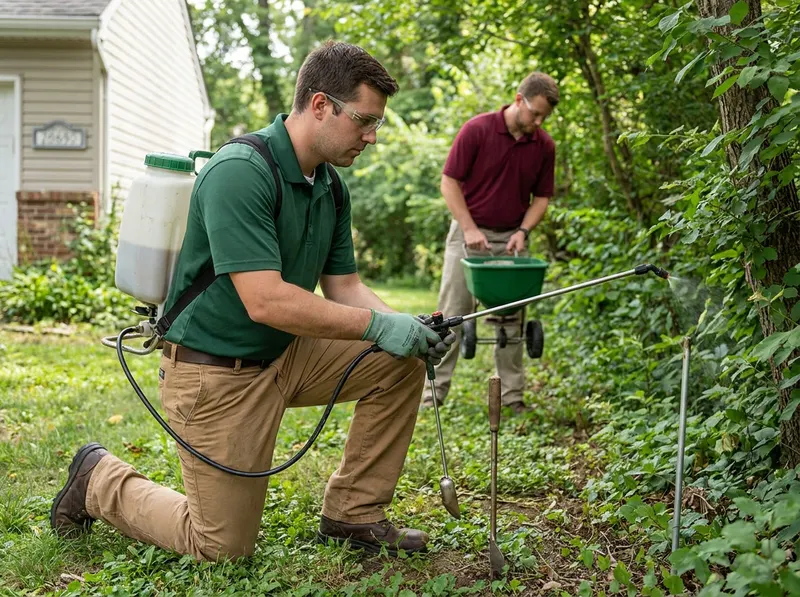
Tick and Lyme vector mitigation targets the biological boundaries where woodland underbrush interfaces with maintained grass. In residential zones such as Hyde Park, Mount Lookout, and Clifton, mature tree canopies drop substantial leaf litter that provides the damp, high-humidity shelter required by the blacklegged tick (Ixodes scapularis). Novera Pest Specialists approaches this exposure through integrated pest management guided by data from the Centers for Disease Control and Prevention and the Ohio Department of Health, which documents the northward expansion of Lyme disease cases across southwest Ohio counties. Field protocols isolate high-risk ground perimeters rather than broadly discharging non-target chemicals over open turf. By establishing targeted micro-droplet barriers of synthetic pyrethroids or cedarwood oils along transitional perimeters, the application kills active questing nymphs while protecting pollinator routes in flowering plant beds.
Controlling the Lyme vector requires addressing primary secondary hosts like the white-footed mouse (Peromyscus leucopus). In densely wooded suburban terrain near natural parks like Eden Park or the ravines of Northside and Westwood, ticks contract the Borrelia burgdorferi bacterium during larval blood meals taken from native rodents, not from mature white-tailed deer. Our team applies targeted rodent-targeted acaricides using biodegradable nesting material tubes calibrated according to parameters outlined by the U.S. Environmental Protection Agency. Mice collect this treated cotton to insulate their ground nests, coating their fur with targeted tick-killing compounds that eradicate 90% of attached immature ticks without harming the host rodent. This strategy aligns with conservation practices recommended by the Ohio Department of Natural Resources, preserving local micro-ecosystems while severing the transmission pathway before pathogens reach humans or domestic pets.
Structural management further hardens residential perimeters against wildlife transport. In historical urban centers like Over-the-Rhine, Walnut Hills, and Mount Adams, wildlife paths frequently connect overgrown alleyways with shaded private courtyards. Technicians measure and install 3-foot gravel or woodchip isolation strips along wooded borders to halt ground-level questing, reflecting recommendations from Ohio State University Extension. The operational sequence follows specific remediation checkpoints:
Property managers and homeowners can schedule an on-site property evaluation by calling (513) 812-8087 to establish immediate ground boundaries.
Every job gets a firm, written price after an on-site visit.
Tell us about your tick and lyme vector mitigation job in Cincinnati and we'll send a clear, written quote, usually the same day.
 Novera Pest Specialists