Mosquito and exterior vector reduction in Cincinnati protects private properties against pathogen-bearing pests such as Culex mosquitoes transmitting West Nile virus and invasive ticks carrying Lyme disease . In…
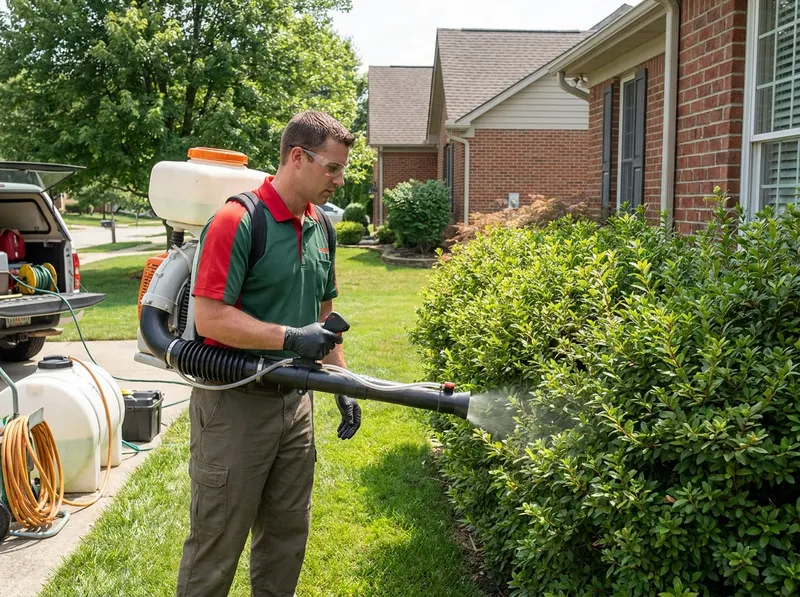
Mosquito and exterior vector reduction in Cincinnati protects private properties against pathogen-bearing pests such as Culex mosquitoes transmitting West Nile virus and invasive ticks carrying Lyme disease. In historic, dense river-valley pockets such as Over-the-Rhine and Mount Adams, exterior treatments balance narrow parcel boundaries with non-target species preservation. For larger residential acreages in Hyde Park, Mount Lookout, and Indian Hill, mature hardwood canopies create microclimates that retain midday humidity, promoting elevated mosquito reproductive rates. River proximity, combined with the city's average 44 inches of annual precipitation, leads to rapid water retention in stormwater collection basins, dense undergrowth, and architectural drainage channels across Clifton and Northside.
Decision-fit considerations center on property geography and vegetation volume. A barrier application targeting lower leaf surfaces fits yards with established shrub beds and dense perimeter hedging, while mechanical grading and biological larvicides fit properties near natural ravines in Westwood or low-lying swales in Pleasant Ridge. The operational trade-off of botanical pyrethrin mists versus microencapsulated synthetic pyrethroids balances residual longevity against pollinator-safe windows. Novera Pest Specialists adheres to Integrated Pest Management (IPM) guidelines published by the U.S. Environmental Protection Agency, strictly avoiding high-drift broadcast spraying near flowering pollinator vegetation or open municipal storm drains regulated by the Ohio Environmental Protection Agency.
Treatment execution follows an established scientific sequence to achieve predictable vector knockdown:
Exterior vector control functions independently from interior structural pest remediation; interior pest sprays will not alleviate outdoor flying pest influxes, and outdoor misting cannot resolve interior rodent or bedbug activity. Homeowners with continuous wooded property borders in Oakley or Walnut Hills require barrier zones renewed on 21- to 30-day operational cycles during the active peak season running from May through October. All field remediation aligns with protocols outlined by the Entomological Society of America, vector surveillance updates from Hamilton County Public Health, and chemical application standards tracked by the National Pesticide Information Center. Safe environmental practices further reference the Pollinator Partnership guidelines and the educational resources of the Infectious Disease Vector Database. To evaluate your property perimeter, call (513) 812-8087.
Every job gets a firm, written price after an on-site visit.
Tell us about your mosquito and exterior vector reduction job in Cincinnati and we'll send a clear, written quote, usually the same day.
 Novera Pest Specialists