Residential flea infestations within Hamilton County routinely develop when wild vectors like raccoons, feral cats, or Virginia opossums deposit parasite eggs into lawn canopies, which companion animals subsequently…
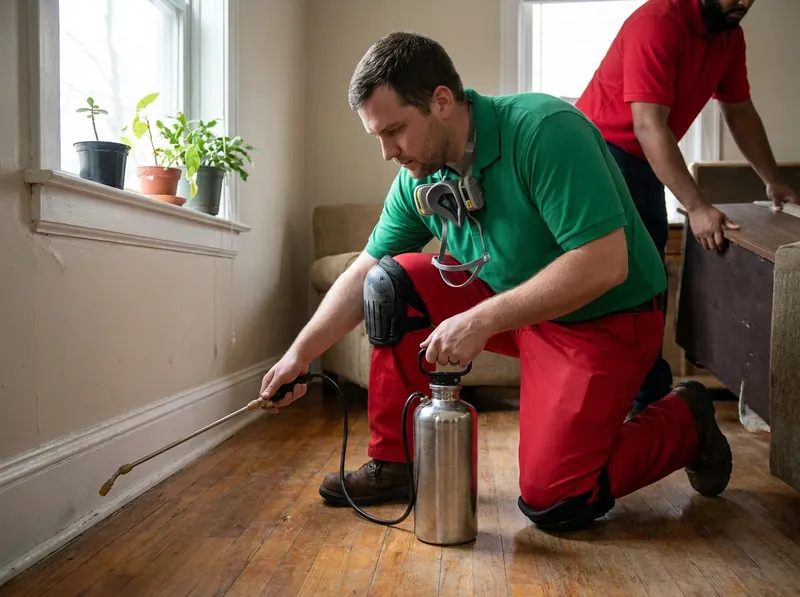
Residential flea infestations within Hamilton County routinely develop when wild vectors like raccoons, feral cats, or Virginia opossums deposit parasite eggs into lawn canopies, which companion animals subsequently track past door sills into interior rug pile. In historic wood-frame properties found throughout Clifton, Northside, and Over-the-Rhine, antique subfloors and settling floorboards provide deep longitudinal gaps where larvae feed on adult flea dirt shielded from regular vacuum suction. Conversely, in the mid-century multi-level homes of Westwood and Pleasant Ridge, sprawling wall-to-wall carpeting and finished basements present broad acreage where pupae remain cocooned inside protective silk shells for up to 5 months until human vibrations trigger mass emergence. Eradicating this insect requires applying dual-action synthetic pyrethroids combined with an insect growth regulator, such as pyriproxyfen, which prevents immature larvae from molting into biting adults as regulated under the U.S. Environmental Protection Agency standards.
Selecting a clinical whole-structure protocol fits severe circumstances where residents discover active bites on ankles, find dried blood frass in pet sleeping quarters, or notice active jumping insects on lower wall baseboards. The mechanical alternative, isolated consumer broadcast spraying, fails because over-the-counter aerosols lack sufficient residual longevity and cannot breach the hydrophobic pupal casing. The operational trade-off of professional treatment involves extensive occupant preparation: all flooring must be cleared of personal items, pet bedding must be laundered at 140°F, and families must vacate the premises during application. Guidance from the Centers for Disease Control and Prevention highlights that controlling siphonaptera infestations reduces human exposure to flea-borne typhus and tapeworms. Furthermore, coordinating pet veterinary therapies alongside environmental sanitation aligns with the clinical directives from the American Veterinary Medical Association.
Following on-site confirmation of treatment scope, remediation progresses through a standardized chronological sequence:
Exterior treatments targeting crawl spaces and foundation perimeters around Mount Adams, Mount Lookout, and Hyde Park properties protect vulnerable moisture pockets under deck footings. Property managers should maintain outdoor turf heights beneath 3 inches in accordance with the Ohio State University Extension to eliminate wildlife resting harborage near door entries. Routine collaboration with structural preservation resources, including the Pest Control Technology technical guides and sanitation mandates by the Hamilton County Public Health, reinforces persistent exclusion against outside wildlife vectors. To arrange a certified inspection and treatment appointment, phone (513) 812-8087.
Every job gets a firm, written price after an on-site visit.
Tell us about your flea elimination job in Cincinnati and we'll send a clear, written quote, usually the same day.
 Novera Pest Specialists